
FASHION
THE PLASTIC CRISIS IN FASHION
BY YESY LOPEZ
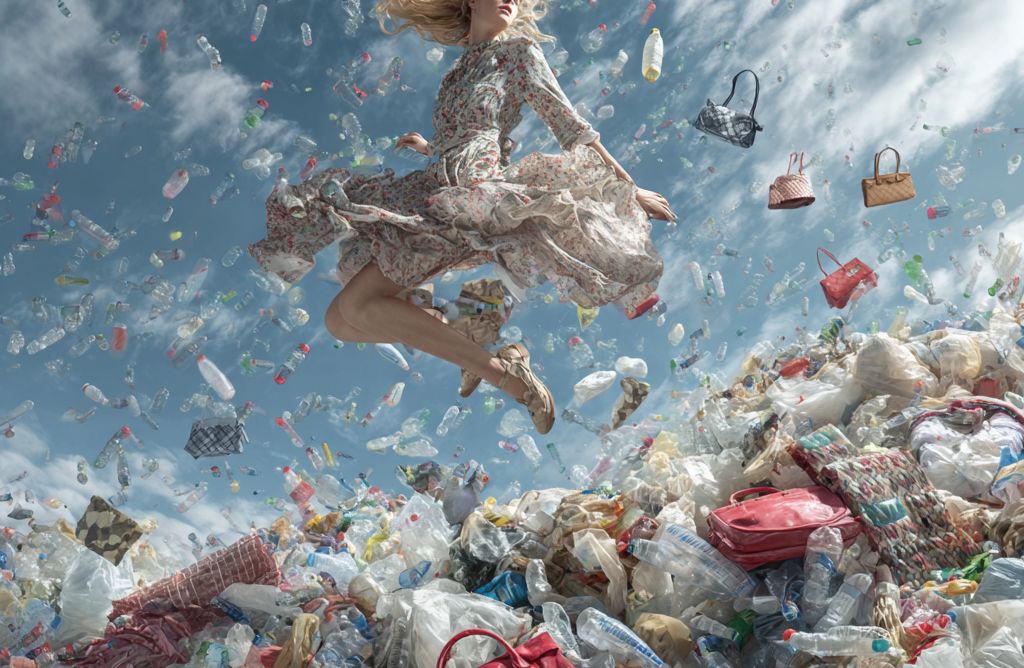
Fashion Isn’t Cotton Anymore — It’s Plastic
What used to be breathable cotton, wool, and linen in our closets is now overwhelmingly polyester, nylon, acrylic, and elastane. The fashion industry has quietly shifted from natural textiles to petrochemical fibers over the past few decades. Since the late 1990s polyester has been the most commonly used fiber in textiles, with synthetics overtaking cotton by the mid-1990s. Today, an estimated 60% of clothing is made of synthetic fibers, essentially forms of plastic derived from oil. Global consumption of synthetics has skyrocketed from only a few thousand tonnes in 1940 to over 60 million tonnes in 2018. By 2020, synthetics made up about 64% of global fiber production, reflecting how dominant plastics have become in fashion’s material mix (polyester alone now commands a vast share).The wardrobe staples of past generations, crisp cotton shirts, cozy wool sweaters, linen summer suits, have been eclipsed by synthetics spun from petroleum.
Polyester Sheds Plastic in the Wash
Your synthetic clothes don’t just impact the environment when they’re made, they continue to have an afterlife of pollution through microplastics. Each wash of a polyester or nylon garment releases countless microscopic fibers into the wastewater. Textile microfibers from laundering are one of the largest sources of microplastic pollution in our oceans. An estimated 500,000 tons of microfibers are shed from clothing and end up in the ocean every year, equivalent to about 50 billion plastic bottles worth of pollution. Our washing machines are invisibly rinsing plastic fluff from our clothes into rivers and seas. This happends becasue synthetic fibers are essentially tiny strands of plastic, and they abrade and break off with wear and washing. A single fleece jacket can shed around 1.7 grams of microfibers per wash (about 1,900 fibers). Most modern wastewater treatment plants cannot fully filter out these fibers. Studies show that even advanced treatment may capture only 60–95% of microplastics, meaning a significant fraction escapes into water bodies. Most microfibers are filtered out during treatment, but some still reach rivers and oceans. Even the fibers that are captured usually get trapped in sludge that can later wash into the environment.
The Environmental Cost of Fashion
Between 1960 and 2018, the volume of textile waste generated in the United States surged more than sixfold, from 1.7 million tons to over 17 million tons per year. But while fashion consumption exploded, recycling barely kept pace. In 2018, only 14.7% of discarded textiles were recycled, while 11.3 million tons went straight to landfills. Synthetic fabrics like polyester and nylon, which dominate modern apparel, don’t biodegrade, slowly shedding microplastics into soil and water. Despite rising awareness, the U.S. still throws away the vast majority of its clothing. And as fast fashion cycles accelerate, this environmental footprint deepens.
| Year | Landfilled (thousand tons) | Recycled (thousand tons) |
|---|
What do We Wear Now?
A new era of fashion is emerging, one that favors recycled materials, low-impact fibers, and garments designed to last. Designers are experimenting with mushroom leather, algae dyes, and biodegradable fabrics. Certifications like GOTS and OEKO-TEX are becoming industry standard, signaling a deeper shift in how we value material quality. Vintage, resale, and repair have gone from niche to mainstream, especially among younger generations. Platforms for thrifting, renting, and upcycling are redefining what it means to own something “new.” Even major brands are offering take-back programs and mending services to extend a garment’s life. Fashion, famously cyclical, seems to be circling back to quality over quantity.